Every October we get the same call. Somebody has looked at an overgrown azalea by the front steps, decided the weekend is free, and cut it back hard. The shrub looks tidy by Sunday evening. Next April it produces about six flowers, and nobody can work out why.
The reason is that an azalea sets next spring’s flower buds during late summer and fall. By the time you are standing over it with the loppers in October, the whole show is already on the plant, sitting in buds you cannot easily see. Cutting it back removes them. The shrub is not sick and you did not kill it. You pruned the flowers off before they opened.
So this is the month to be careful about what you cut. Here is how we sort it on our own routes.
Leave it alone until after it blooms
Anything that flowers in early spring has next year’s buds on it right now. In this part of north Atlanta that means azalea, forsythia, dogwood, and the mophead hydrangea in half the yards in Dunwoody. Those get pruned right after they finish flowering in spring, when the plant has all season to build the next set of buds. Prune them now and you trade a spring for a tidier November.
Two around here break the rule often enough to be worth naming: oakleaf hydrangea and the late-flowering azaleas. If you are not sure which you have, the safe move is to wait and watch it bloom once.
Wait for late winter
Summer bloomers and anything grown for its foliage go in late February or early March, when the plant is still dormant but the worst cold is behind us. Crape myrtle, nandina, holly, boxwood. That timing gives you a clean cut on a dormant plant and new growth that comes out as the season warms rather than into a freeze.
On crape myrtles, late winter is the window, and it is not an invitation to take the whole top off. Cutting a crape myrtle back to knuckles every year produces a thicket of whippy shoots that flop over in the first summer storm. We take out crossing branches, suckers at the base, and anything dead, and otherwise let the tree keep its shape.
Why fall pruning backfires
Beyond the flower buds, there is a timing problem. A cut tells the plant to grow, and growth that comes out in late October is soft. First frost here usually lands around mid-November. Tender new shoots meet that frost and blacken, and the plant spends winter with damage it did not need to carry.
The same logic applies to fertilizer this time of year. Pushing a shrub into growth right before the cold is the horticultural equivalent of starting a long drive on an empty tank.
What you can cut any time
Dead, broken and diseased wood. That is not seasonal work. If a limb came down in a storm or a branch is clearly gone, cut it back to the main branch or the trunk and do not wait for a calendar date. Leaving broken wood on a plant through winter invites rot and gives insects a way in.
We also take out anything that has become a hazard, like a limb over a walkway or a branch rubbing a roofline, whatever the month. Safety outranks flowering.
The scraggly shrub problem
Sometimes a plant is beyond a light trim. A ten-foot azalea that has gone leggy at the base and barely flowers is not going to be fixed by tipping it back. That one can be cut hard in late winter to rebuild its shape. You lose a spring of flowers and you get a healthier plant that blooms properly the year after.
That is a real decision with a real cost, so we would rather make it with you standing there than surprise you with it. Most overgrown shrubs are worth renewing. A few are the wrong plant in the wrong spot, and the honest answer is to move them in the fall planting window rather than fight them every year.
Why we care about the timing
Pruning at the wrong moment is one of the quietest ways a yard gets expensive. A shrub cut at the wrong time does not die; it underperforms, gets cut again the next year to fix how it looks, and eventually gets pulled out and replaced with something from a nursery pot. Every one of those replacements carries water, fuel and plastic behind it.
Cutting at the right time means the plant you already own keeps doing its job. That is the version of sustainability that shows up in a yard rather than in a brochure, and it costs nothing except knowing which month to pick up the loppers.
If you want a hand
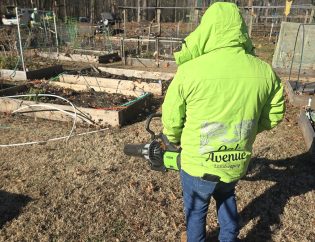
Pruning is part of what we handle on maintenance visits, and the crew works off battery equipment, so the pruning happens without a two-stroke engine running outside your window for an hour. If you have a shrub you are unsure about, or a row of something that has outgrown its spot, send us a note and we will take a look at it. More of our seasonal write-ups are in the guides.