Every November the same scene plays out on streets across Dunwoody and Sandy Springs. The oaks let go, the lawns disappear under a brown blanket, and by Saturday morning the curb is lined with paper bags waiting for the county truck. It feels like the responsible thing to do. For a lot of yards, though, the better move is to keep most of those leaves right where they are, just in smaller pieces.
Here’s how to do that well in north metro Atlanta: mow leaves back into the lawn, turn the extra into bed mulch or compost, and leave some whole for the insects that spend winter in them.
Why leaves are worth keeping
Fallen leaves are free organic matter. When they are chopped small and left on the ground, soil life breaks them down and returns that material to the soil. UGA Extension notes that once leaves are mulched with a mower and get a little rain, they can “melt away in just a few days” and give nutrients and organic matter back to the soil.
There is a waste side to this too. The EPA estimated that Americans generated 35.4 million tons of yard trimmings in 2018, about 12 percent of all municipal solid waste, and roughly 10.5 million tons of that went to landfills. Leaves you keep on your own property never have to be bagged, hauled or processed anywhere.
Mowing leaves into the lawn: what the research says
The most common worry is that a layer of chopped leaves will smother the grass. Turf researchers at Michigan State University tested exactly this. They found that a layer of maple and oak leaves up to six inches deep could be mulched into established turf with no apparent harm. The decomposing leaf pieces supplied nutrients, the lawns greened up faster in spring, and a later study linked mulched maple and oak leaves with fewer dandelions in the turf.
The key word is established, and the leaves have to be chopped small. Whole leaves piled deep on grass are a different story. As the Xerces Society puts it, a thin layer of leaves is healthy for grass, but too many can kill it.
How to do it well
- Mow when the leaves are dry. Wet leaves clump and paste themselves to the grass instead of shredding. UGA Extension is direct about this: don’t try to mulch wet leaves.
- Use a sharp blade. A worn blade loses the lift it needs to pull leaves up and cut them. A dedicated mulching blade helps but is not required, and neither is a bagger.
- Raise the deck. Michigan State suggests the mower’s highest setting. Colorado State recommends the same, with the bag removed.
- Go over it more than once. For a thick layer, make a second pass in a crisscross pattern. UGA suggests blowing the leaves back toward the middle of the lawn and running over them until most pieces are about the size of a dime or smaller.
- Don’t chase every fleck. Some bits of leaf will still be visible afterward. They keep breaking down through winter and early spring.
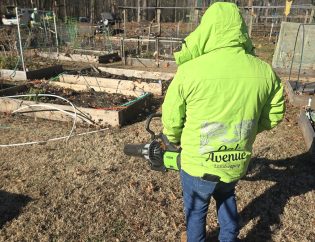
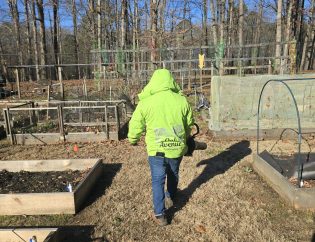
Our crews run battery-electric mowers and blowers, so repeat passes come without exhaust fumes and with far less noise. To be honest, a blower is still sometimes the right tool. Clearing a patio or moving a drift off the driveway before mowing are jobs it does well. If you’re curious about local rules on gas equipment, our post on gas leaf blower rules in Dunwoody, Sandy Springs and Brookhaven covers it.
Oak leaves, maple leaves and the ones to skip
North Atlanta yards are full of oaks, with maples and plenty of others mixed in. The Michigan State research used both oak and maple leaves, so either can go back into an established lawn once chopped.
The ones to be careful with are walnut and pecan. UGA Extension advises against using them as mulch because of natural compounds that can suppress the growth of other plants.
Be gentle with newly seeded fescue
Many tall fescue lawns in our area get seeded or overseeded in September and October, which UGA recommends as the best window. That timing puts tender seedlings on the ground just as the leaves start to fall.
Young grass needs light and bruises easily. UGA’s advice for new fescue is to wait until seedlings are ready to mow, use a sharp blade, and never mow them wet. So don’t let leaves pile up and shade a freshly seeded lawn, and don’t grind a thick layer into it. Keep leaves off with a light rake or a gentle blower pass, then start mulching lightly once the grass has been mowed a few times. The extra leaves can go into beds.
Shredded leaves in beds and compost
Leaves that the lawn can’t use make excellent mulch. UGA Extension recommends shredding them first, since shredded leaves stay put instead of blowing around and are less likely to mat down and block water and air. A three- to five-inch layer of shredded leaves around trees, shrubs and flowers helps protect roots through winter. If you prefer a tidier look, UGA suggests using leaves as a base layer of two to three inches and topping them with pine straw or bark.
Leaves are also the classic “brown” ingredient in a compost pile. They are high in carbon and low in nitrogen, so they work best mixed with green material like grass clippings or kitchen scraps. Colorado State Extension notes that keeping the pile moist speeds things up.
Leaf mold: the slow, easy option
If you have more leaves than you know what to do with, pile them up and walk away. Leaf mold is simply leaves that have partly broken down, mostly through fungi rather than the bacteria that drive a hot compost pile. UGA Extension describes it as a soil conditioner that improves structure and helps water and air move through soil, and it makes a good two-inch mulch on its own.
The Royal Horticultural Society says most leaves take about two years to fully break down this way, and that oak leaves are among the best for it. Shredding them with a mower first speeds the process. A simple ring of wire fencing in a shady corner is all you need.
Leave some whole for the insects
This is where mulching needs a little balance. The Xerces Society points out that many insects spend winter in leaf litter. Woolly bear caterpillars tuck into leaf piles, luna moths and swallowtails disguise their cocoons and chrysalises as dead leaves, and queen bumble bees hibernate just an inch or two down in the soil. Shredding leaves with a mower can destroy those eggs, caterpillars and cocoons along with the leaves.
So the most wildlife-friendly plan is not to mulch everything. Mow the leaves that land on the lawn, where grass needs light. Then rake or blow a share of whole leaves into beds, under shrubs and around tree bases, and leave them there through winter. Xerces actually suggests a rake or blower over a mower for this, since both keep leaves intact. It’s one of the easiest things you can do for pollinators, and it fits the thinking behind our eco-friendly lawn care.
When to start in north Atlanta
Color usually peaks in metro Atlanta in early November, later than in the north Georgia mountains, and leaves keep falling for weeks after. In practice, plan on regular leaf passes from late October into December. Our Atlanta lawn care calendar shows how this fits alongside fall seeding and other seasonal jobs.
If you still end up with more than you can use, DeKalb County Sanitation handles yard waste for Dunwoody. The county collects yard trimmings weekly in biodegradable paper bags or cans up to 40 gallons, and does not accept plastic bags. Other cities in our area use different haulers, so check with yours.
If you’d rather hand off fall cleanup, our residential maintenance crews can take it on, with quiet electric equipment.
Questions people ask
Will mulched leaves kill my grass?
Not on an established lawn, as long as they’re chopped small. Whole, wet leaves left in a thick mat for weeks are what cause trouble.
Do I need a special mulching mower?
No. A regular rotary mower with a sharp blade works. A mulching blade helps, and you’ll want the bag off and the deck set high.
What about my new fescue seedlings?
Keep leaves from piling up on them, and don’t mow seedlings when wet. Gently rake or blow leaves off until the new grass is established, then mulch lightly.
Should I mulch every leaf?
Probably not. Mulch what falls on the lawn, and leave a layer of whole leaves in beds and under trees for overwintering insects. If you have questions about your yard, get in touch.