If your fescue came out of this summer thin, patchy and brown at the edges, you’re not alone, and you haven’t done anything wrong. Tall fescue is a cool-season grass that we grow here because it copes with shade better than Bermuda or Zoysia. July and August in Dunwoody are simply hard on it. Nearly every fescue lawn in Dunwoody, Sandy Springs and Brookhaven loses some ground over the summer. Autumn is when you win it back.
This is how we go about it, in the order we do it. We’ve tried to keep it honest about what matters and what doesn’t.
Timing: the window is open now, and it doesn’t stay open long
UGA Extension puts the ideal seeding window for tall fescue in Georgia at September through October. Seed any earlier and the young grass meets the last of the summer heat and the diseases that come with it. Seed too late and the seedlings go into winter without enough root to hold on.
Around here we aim for the last week of September through the middle of October. By then nights are cooling off, but the soil is still warm enough for seed to come up quickly, often within a week to ten days. If the forecast is still in the nineties, wait a week. Nobody gets a prize for being first.
Check which grass you actually have
This sounds obvious, but it catches a lot of people out. Fescue stays green through winter and grows in clumps. Bermuda and Zoysia spread by runners, love full sun, and go tan once the first frosts arrive. If most of your lawn is Bermuda or Zoysia, overseeding it with fescue leaves you with a patchwork lawn that looks wrong for half the year. Those grasses get a different autumn routine, and our month-by-month lawn calendar covers each of them.
Plenty of yards here have both: fescue under the oaks and Bermuda out by the street. That’s fine. Just seed the fescue parts.
The one mistake that wastes the whole season
Autumn is also when a lot of lawns get a pre-emergent weed treatment, to stop annual bluegrass, henbit and chickweed before they sprout. A pre-emergent can’t tell a weed seed from a grass seed. Spread it where you’ve just sown fescue and you’ve paid to stop your own lawn from coming up.
If you use a lawn service, ask them straight out whether a pre-emergent is going down this autumn, and keep it off anywhere you’re seeding. If you’re doing it yourself, read the label. Most products say how long to wait before seeding, and it’s usually months, not days. We would rather put up with a few winter weeds in a newly seeded area and deal with them in spring than lose the seed.
Aerate first, because the problem is usually underfoot
Most thin lawns around here aren’t short of fertilizer. They’re compacted. Our soil is a shallow layer of loam over dense red clay, and once it’s been walked on, parked on and baked for a summer, roots can’t get down into it and water runs straight off.
Core aeration fixes that. The machine pulls out small plugs of soil rather than just poking holes, which is what the cheap spike aerators do. Leave the plugs on the lawn. They break down within a couple of weeks and put that soil back where it came from. If you can, spread a thin layer of compost over the top afterwards and rake it into the holes. That’s the slow, unglamorous work that builds better soil over two or three autumns. We go into it in more depth on our eco-friendly lawn care page.
Aerate when the soil is moist but not soggy, ideally a day or two after a decent rain. Bone-dry clay won’t give up a plug.
Seed: buy good seed, and not too much of it
Look for the blue certified tag on the bag. It means the seed has been tested for purity and germination, and it’s the easiest way to avoid buying a bag padded with weed seed or last year’s leftovers. Turf-type tall fescue blends have finer blades and stay lower than the old Kentucky 31, and a blend of two or three varieties copes with disease better than any single one.
For rates, UGA Extension suggests 5 to 6 pounds per 1,000 square feet on bare ground. For overseeding, scale that down to how much of the lawn you’ve lost. If half the stand has thinned out, about 3 pounds per 1,000 square feet is plenty. Seeding heavier than that doesn’t give you a thicker lawn. The seedlings just crowd each other out, and the extra seed is wasted.
Spread half the seed in one direction and the other half at right angles to it. You’ll get far fewer bare stripes. Then rake it in lightly or roll it so the seed is touching the soil. Seed sitting on top of old thatch usually dries out before it can root.
Water little and often, and you’re allowed to
For the first three weeks, the top inch or two of soil needs to stay damp. That usually means watering lightly every day, a tenth to a quarter of an inch, rather than one long soak. Once the grass is up and growing, cut back to deeper, less frequent watering so the roots follow the water down.
A lot of people don’t realize Georgia’s outdoor watering rules make room for this. Normally landscape watering is only allowed between 4 p.m. and 10 a.m. Newly planted seed and turf, though, are exempt for 30 days after installation, so a short midday mist on a hot October afternoon is allowed. After that, the usual hours apply again, and early morning is the best time to water anyway.
From a water point of view, a well-rooted fescue lawn on decompacted soil needs noticeably less watering next summer than a thin one on hard clay. That payoff is the reason to do the work properly now.
The first few mows
Hold off until the new grass is about 2 inches tall, usually around three weeks after seeding. Mow when the lawn is dry, with a sharp blade, and take off no more than a third of the height. A dull blade tears seedlings out rather than cutting them. As the lawn fills in, raise the mower to 2.5 to 3 inches and leave it there. Taller fescue shades out weeds and keeps its roots deeper.
Leave the clippings on the lawn. They break down in days and give back some of the nitrogen the grass just used.
The leaves are coming, so have a plan
The oaks and maples that give fescue the shade it needs will start dropping leaves right on top of your new seedlings in late October. A thick mat of wet leaves left for a week will smother young grass.
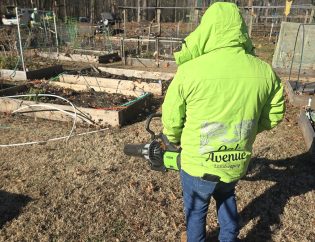
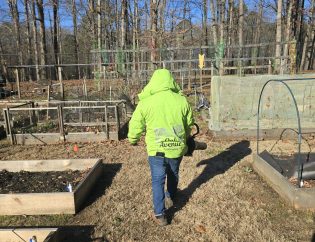
Keep them moving, but go easy on it. A leaf blower on full power can strip seed out of the soil in the first couple of weeks, so rake gently or use the blower on a low setting. Once the grass has been mowed a couple of times, you can simply mulch light leaf cover back into the lawn with the mower instead of bagging it. It feeds the soil and saves a trip to the curb. Our crews run battery-electric mowers and blowers, which is partly about noise and fumes, and partly because it means we can do this work in the middle of a weekday without the whole street hearing it.
What to expect, honestly
You’ll see green fuzz within about ten days, and it will look like a lawn within a month. It won’t look like the lawn you had in mind until next spring. Seedlings keep putting down roots right through winter, which is one of the best things about fall seeding here. Shaded spots under a dense canopy will always be a bit thinner than the open lawn. If a patch gets less than about four hours of sun, no seed will fix it for long, and mulch or a shade-loving groundcover is often the better answer.
Most lawns need two or three autumns of aerating, a little compost and overseeding before they stop thinning out every summer. It’s steady work, not a one-off fix, and the lawn gets less dependent on water and fertilizer every year you keep at it.
Questions people ask
Can I overseed fescue in November?
You can, but it’s a gamble. The seed comes up slowly in cold soil, the seedlings go into winter small, and UGA’s research found that fescue seeded in November and then treated with a pre-emergent the following February ended up in noticeably worse shape. If you’ve missed the window, spring seeding is possible but tougher, since the young grass then faces a Georgia summer in its first year.
Should I fertilize when I seed?
A starter fertilizer helps, and a soil test tells you what your lawn is actually short of, including whether it needs lime. Your local UGA Extension office can run one. Skip weed-and-feed products entirely on newly seeded ground.
Do I have to aerate every year?
Not forever. Heavily compacted lawns benefit from it two or three autumns in a row. After that, most lawns here do fine with aeration every other year, alongside compost and higher mowing.
Is this something Oak Avenue does?
Yes. Fall aeration and overseeding are part of our residential maintenance work across Dunwoody, Sandy Springs, Brookhaven and the surrounding area, and our eco-friendly lawn care adds compost topdressing to it. All of it is done with battery-electric equipment. If your lawn needs more than a fall tune-up, get in touch and we’ll come and walk it with you first.